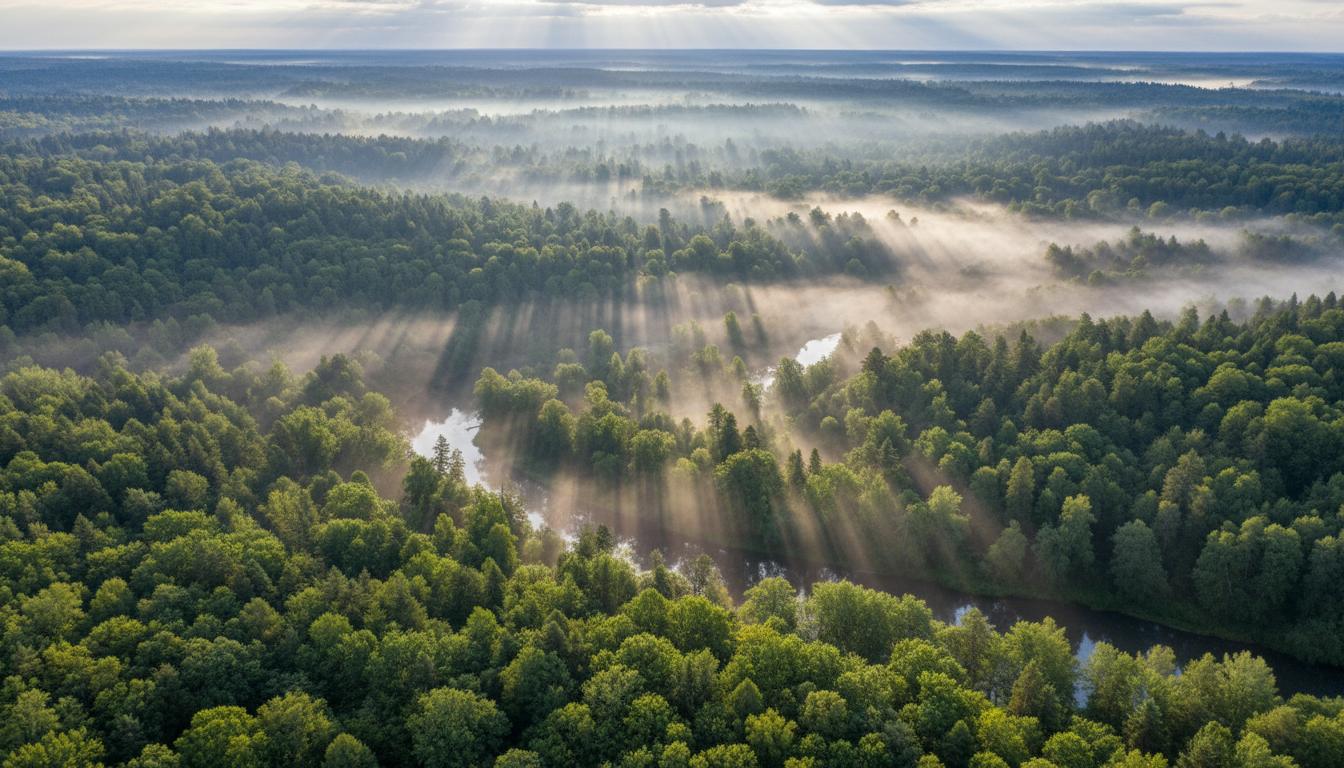
Why local genetics are the foundation of a lasting forest
When a forest is lost, the most obvious thing to plant in its place is a tree. The less obvious, and far more important, question is: which tree? Across two decades of restoration work, we have learned that the answer is almost always a native species — and increasingly, a native genotype from a local seed source.
A native tree is one that evolved in a particular region alongside the insects, fungi, birds, and soil microbes that depend on it. Replace it with a fast-growing exotic, and the tree may survive — but the forest around it never will.
Why exotics underperform over time
Exotic plantation species can look spectacular in year three and heartbreaking in year fifteen. They often lack the mutualisms that native trees rely on for nutrients, pest resistance, and pollination. Many also fail to support local food webs: an oak might host 500 species of caterpillar, while an equivalent stand of eucalyptus feeds almost none.
- Native trees sustain 4–10x more insect life than exotics of the same size.
- Local seed sources survive regional droughts and frosts 30–60% better.
- Mixed-native stands store more carbon per hectare after 20 years than monocultures.
A forest is not a collection of trees. It is a relationship between trees, and the place that made them.
What we do differently
Every OneMoreTree project begins with a species audit. We inventory what should be there before we decide what to plant, and we partner with ecologists on the ground to source seed that matches the local ecosystem — not the global catalog.